Start with Why, Not What
Before you buy a single piece of decor, ask yourself what you want your space to feel like. Calm? Energizing? Creative? Cozy? Your answer becomes the filter through which every design decision flows. Minimalist home design isn't about following rules — it's about creating a space that serves your life.
The Edit: What Stays, What Goes
The first step in any minimalist space transformation is the edit. Look at every object in your room and ask: "Does this serve a purpose? Does it bring me genuine satisfaction?" If the answer to both is no, it's clutter — no matter how expensive or trendy it is.
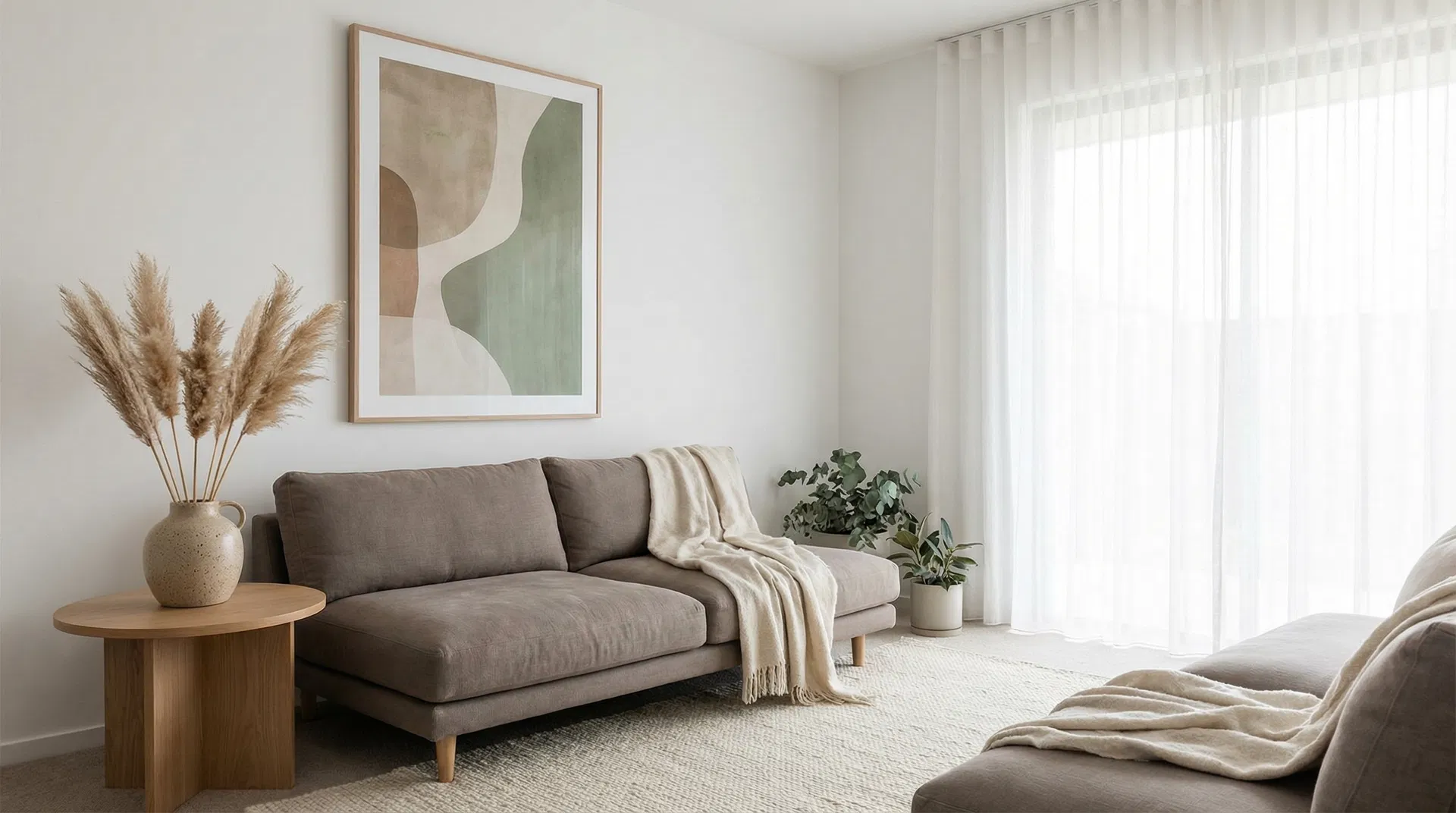
This doesn't mean your space should be empty. A well-curated room might have fewer items, but each one carries more weight. A single striking art print on a clean wall makes a stronger statement than a dozen forgettable pieces competing for attention.
The Power of Negative Space
In design, what you leave out is as important as what you include. Negative space — the empty areas around and between objects — gives your eye a place to rest and makes the objects you've chosen stand out more.
Leave breathing room on shelves. Don't fill every wall. Let your furniture have space around it. This isn't wasted space — it's intentional design that makes your whole room feel more peaceful and more sophisticated.
Choosing Statement Pieces
In a minimalist space, every piece matters more. This is where quality and intention really count. Instead of buying ten affordable prints, invest in one or two that genuinely move you. Instead of a shelf full of decorative objects, choose three that tell a story.
Art prints are particularly powerful in minimalist spaces because they add personality and visual interest without adding physical clutter. A well-chosen print can define the entire mood of a room.
Color as a Tool
Minimalist doesn't mean monochrome. Color is one of your most powerful tools — you just use it with intention. Start with a neutral base (whites, grays, warm beiges) and add color through a few carefully chosen accents. A single piece of art with a bold color can anchor an entire room's palette.
Living with Less, Living with More
The paradox of minimalist living is that by having less, you experience more. When your space isn't crowded with things competing for your attention, you actually notice and appreciate what's there. Your morning coffee tastes better in a mug you love. Your evening feels calmer in a room that breathes.
Minimalist home design is a practice, not a destination. Start small — one room, one shelf, one wall. Let the results speak for themselves, and let the process teach you what you actually value. The answer might surprise you.